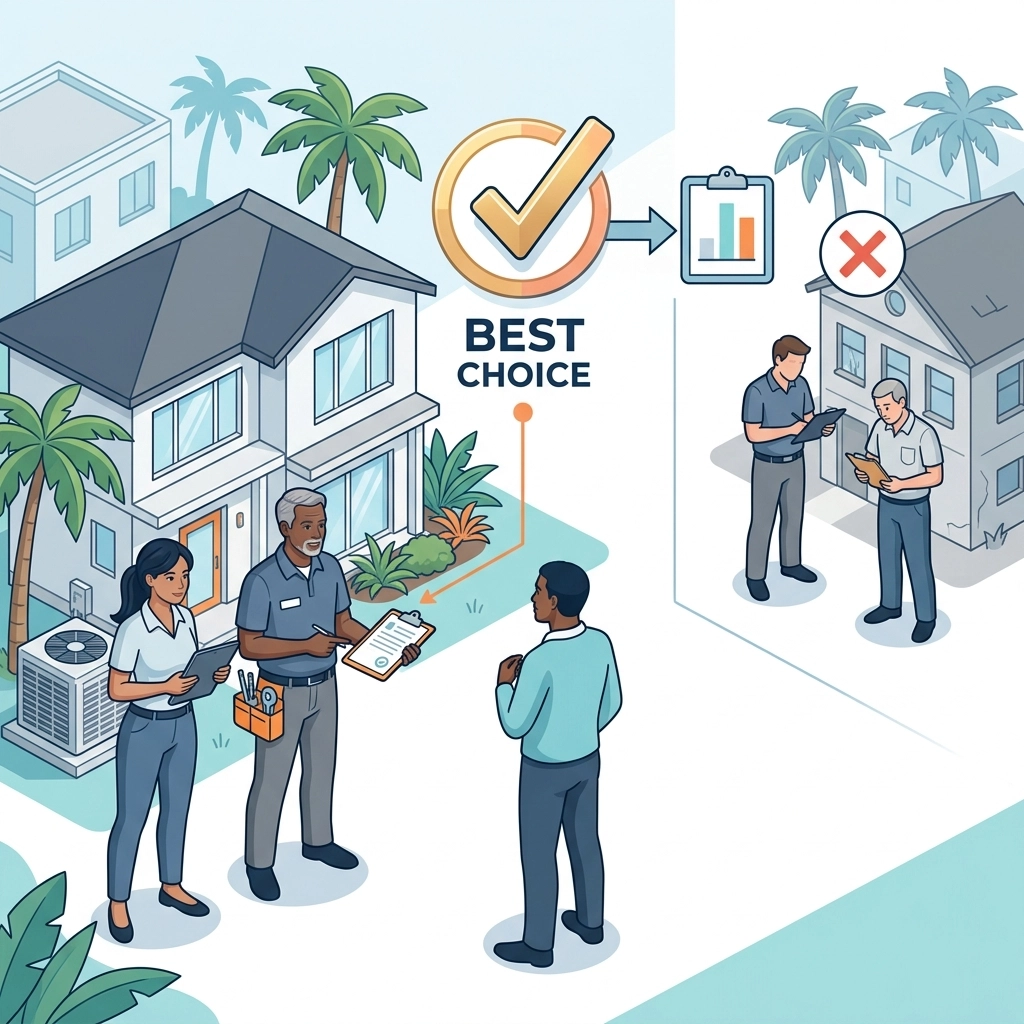
In the fast-paced world of Florida real estate and development, time isn't just money, it’s everything. If you’ve ever waited weeks for a municipal inspector to show up or months for a building permit to clear the city’s desk, you know the frustration of the "red tape" bottleneck. This is exactly why the Florida legislature passed Statute 553.791, allowing developers, contractors, and homeowners to hire a private provider inspection Florida service instead of relying solely on the local building department.
Choosing the right partner for your project can be the difference between hitting your grand opening date or paying interest on a construction loan for an extra six months. But with so many firms popping up, how do you know which one actually delivers on the promise of speed and efficiency? In this guide, we’ll compare the key factors you need to consider to find the best private provider for your specific needs, ensuring your permitting process Florida is as smooth as possible.
What is a Private Provider? (The Florida Context)
Before we dive into the comparison, let’s clear up the jargon. In Florida, a "Private Provider" is a licensed engineer or architect who is authorized to perform private provider plan review and private provider inspections. Essentially, they act as a high-speed alternative to the government building official.
By utilizing private provider services, you are effectively "outsourcing" the regulatory hurdles. You still have to follow the Florida Building Code, there are no shortcuts on safety, but you get to skip the municipal queue. Whether you are working on a high-rise in Miami or a residential remodel in Walton County, knowing your options for private provider inspections is step one in taking control of your timeline.
Key Factors to Compare When Choosing a Provider
Not all providers are created equal. Some are one-man operations that might be just as stretched thin as the city inspectors, while others are full-service firms like Florida Private Providers (FPP) that offer a "zero-red-tape" experience. Here is how to compare them:
1. Speed and Availability
The number one reason to hire a private provider is speed. When comparing firms, ask about their "notice to inspect" window. Municipal inspectors often require 24 to 48 hours' notice, and even then, they might give you a vague 8-hour window for when they’ll actually show up.
A top-tier private provider inspection Florida firm should offer:
- Next-day (or even same-day) inspections: Can they get to your site when the concrete is ready to pour?
- Virtual Inspection Options: Many modern providers use technology to conduct remote inspections for minor trades, which can save hours of waiting.
- Emergency Availability: Construction doesn't always happen between 9 and 5.

2. Breadth of Private Provider Services
Some firms only handle structural inspections, while others can manage the entire lifecycle of your project. For the most efficient experience, you want a firm that offers a comprehensive suite of construction inspection services florida. This includes:
- Private Provider Plan Review: Getting your plans checked and stamped before they even hit the city's desk.
- Threshold Inspection Florida: For "threshold buildings" (greater than 3 stories or 50 feet), you need specialized inspectors. Ensure your provider is qualified for these high-stakes structural reviews.
- Multi-Trade Inspections: Can they handle mechanical, electrical, and plumbing (MEP) all at once?
If you have to hire three different companies to handle your professional plan review and your field inspections, you’re just creating more red tape for yourself.
3. Geographic Coverage and Registration
Under Florida law, a private provider must be registered with the local jurisdiction where the work is being performed. When comparing providers, check their reach. Do they have experience in the specific county where you’re building? A firm that understands the nuances of private plan review in Volusia County might have a different workflow than one focused on Wakulla County.
How to Expedite Permitting Florida: A Process Overview
One of the biggest advantages of working with a private provider is the ability to expedite permitting florida. Under Florida Statute 553.791, if you use a private provider for plan review, the local building department is required to issue your permit within a significantly shortened timeframe, often within 20 to 30 days, depending on the project type.

The Expedited Plan Review Florida Difference
When you submit plans through the traditional municipal route, your documents might sit in a "pending" pile for months. By using plan review services florida from a private firm, the "heavy lifting" of the code review is done upfront. The city then performs a "quality assurance" check rather than a full page-by-page review. This drastically reduces the permitting process florida and gets your crew on-site faster.
Comparing Costs: Municipal Fees vs. Private Provider Fees
It’s a common misconception that private providers are an "extra" cost. While you do pay the private firm for their expertise, Florida law requires the municipality to reduce your permit fees if you use a private provider. Since the city isn't doing the manual labor of the inspections or the plan review, they can't charge you the full price.
When comparing providers, look for transparent pricing. The "best" choice isn't always the cheapest hourly rate; it’s the firm that prevents a $10,000-a-day delay on a commercial job site. At FPP, we focus on the advantages that provide the highest ROI for your project.

Specialized Inspections: Why "Threshold" Matters
If you are working on a large-scale project, you cannot ignore the requirement for a threshold inspection florida. These inspections are mandatory for buildings that exceed specific height or occupancy limits to ensure structural integrity.
When choosing a provider, confirm they have "Threshold Inspectors" on staff who are specifically certified by the Florida Department of Business and Professional Regulation (DBPR). A provider that handles both your standard private provider inspections and your threshold requirements provides a seamless flow of documentation, which is vital when it comes time to get your Certificate of Occupancy (CO).
Red Flags to Watch Out For
As you compare your options for construction inspection services florida, keep an eye out for these warning signs:
- Lack of Insurance: Florida law requires private providers to carry specific professional liability insurance. If they can't show you a certificate, walk away.
- Poor Documentation: In the world of building codes, if it isn't documented perfectly, it didn't happen. Ask to see a sample of their inspection reports.
- Limited Communication: If they don't answer the phone when you’re looking to hire them, they definitely won't answer when you’re standing in a trench waiting for a footer inspection.

The FPP Difference: Zero Red Tape
At Florida Private Providers (FPP), we’ve built our reputation on being the "anti-bureaucracy" choice. We know that the permitting process florida can be a nightmare of forms, delays, and missed connections. Our goal is to expedite permitting florida by providing a single point of contact for all your regulatory needs.
Whether you need a private provider plan review to get your project off the ground or daily private provider inspections to keep the momentum going, we specialize in speed. We don't just find problems; we help you find code-compliant solutions so you can keep moving.
Conclusion: Making Your Choice
Choosing the right private provider inspection Florida partner is one of the most impactful decisions a developer can make. To summarize:
- Prioritize Speed: Ensure they can meet your schedule, not the other way around.
- Verify Expertise: Confirm they can handle everything from MEP to threshold inspection florida.
- Check Local Standing: Make sure they are registered and respected in your specific county.
- Demand Efficiency: Look for a firm that uses technology to expedite permitting florida and reduce paperwork.
Don't let municipal backlogs hold your project hostage. By choosing a high-quality private provider, you take back control of your construction timeline and ensure that your building is safe, compliant, and, most importantly, finished on time.
If you’re ready to experience a faster, more professional way to build, contact us today to learn how we can streamline your next project.
Disclaimer: This content is for educational purposes only and does not replace professional medical, legal, or therapeutic advice. Always consult qualified professionals regarding specific building code requirements and Florida statutes.
Frequently Asked Questions
Can I switch to a private provider if my project has already started?
In many cases, yes. However, it is much easier to start the process from the beginning of the permit application. If you switch mid-stream, you’ll need to coordinate with the local building official to ensure all previous inspections are accounted for.
Does a private provider have the power to "pass" a failing inspection?
No. A private provider must enforce the Florida Building Code just as strictly as a municipal inspector. The benefit isn't "easier" inspections; it's "faster" and more "attentive" inspections.
Is it really faster to use a private provider for plan reviews?
Absolutely. Many municipalities have 6-week backlogs just to look at a set of plans. A private provider can often complete a private provider plan review in a matter of days, triggering the statutory requirement for the city to issue the permit faster.