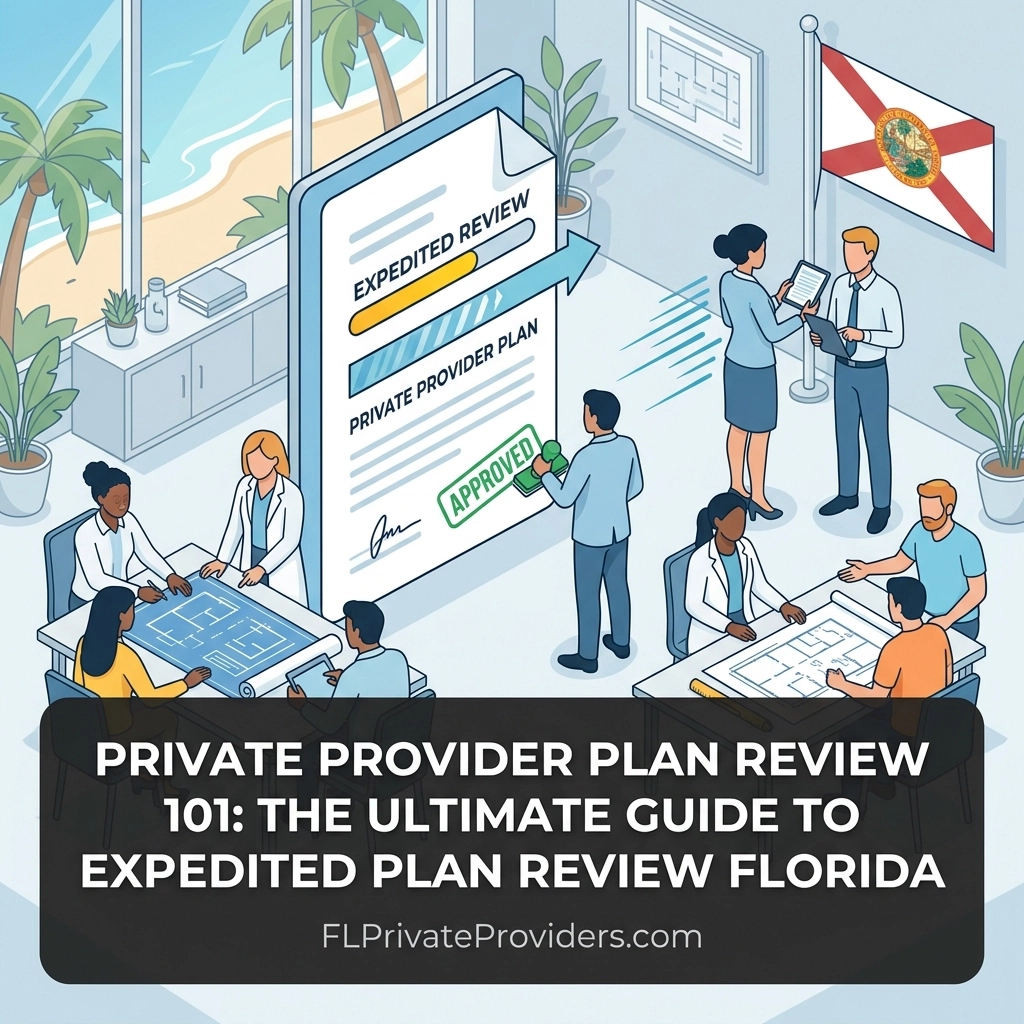
If you have ever been involved in a construction project in the Sunshine State, you know the drill. You’ve got the capital, the crew is ready to break ground, and the blueprints are perfect. Then, you hit the wall: the municipal permitting office. In the past, "waiting for the city" was just an accepted part of the overhead. But as we move through 2026, the game has changed.
At Florida Private Providers (FPP), we believe that red tape shouldn't be the reason your ROI takes a hit. Whether you are building a high-rise in Miami or a residential development in Orlando, understanding private provider plan review is your ticket to bypassing the bureaucratic bottleneck. This guide breaks down everything you need to know about expedited plan review Florida and how to leverage private sector expertise to keep your project moving at the speed of business.
What is Private Provider Plan Review?
In 2002, the Florida Legislature realized that local building departments were overwhelmed, leading to massive delays that stifled economic growth. The solution was Florida Statute §553.791, which created the "Private Provider" program.
Essentially, this law allows a property owner or developer to hire a dually licensed private professional, usually a Professional Engineer (PE) or a Registered Architect, to perform the plan review and inspections that would otherwise be handled by the local building official.
When you opt for private provider services, you aren't "skipping" the rules; you are simply hiring a high-speed team to ensure those rules are met. The result? You get your permits faster, your inspections done on your schedule, and your project completed months ahead of the traditional timeline.
Why the Permitting Process Florida Needs an Upgrade
The traditional permitting process Florida residents and developers deal with is often plagued by understaffed departments and fluctuating workloads. A municipal reviewer might have 50 files on their desk today; yours is just number 51.
By contrast, private provider plan review offers:
- Speed: While a city might take 30 to 60 days for a first round of comments, a private provider can often complete a comprehensive review in a matter of days.
- Expertise: You are working with licensed engineers and architects who specialize in the Florida Building Code.
- Direct Communication: No more "ghosting" by the permit office. You have a direct line to the person reviewing your plans.

The Ultimate Benefit: Expedited Plan Review Florida
The phrase "expedited plan review Florida" isn't just a marketing buzzword, it's a statutory right. Under the law, when you submit a permit application backed by a private provider’s affidavit, the local building department has a strict clock to follow.
If the private provider certifies that the plans comply with the Florida Building Code, the building official must issue the permit or provide a specific list of deficiencies within a very tight window (typically 10 business days for the initial review). If they miss that window, the permit can be deemed approved by operation of law in certain circumstances, though it's always better to have a collaborative relationship with the local office.
At FPP, we’ve seen this reduce the "permit-in-hand" time by 50% to 70%. In a market where interest rates and material costs are constantly shifting, that time savings is worth its weight in gold. You can learn more about navigating Florida construction permitting in 2026 to see how these timelines have evolved.
The Financial Side: Fee Reductions
One of the best-kept secrets in the industry is that using a private provider can actually save you money on municipal fees. Florida law requires local governments to reduce their permit fees when a private provider is used for plan review and/or inspections.
Since the city isn't doing the heavy lifting, they aren't allowed to charge you the full price. Typically, these reductions range from 10% to 30%. In many cases, the fee reduction from the city goes a long way toward covering the cost of hiring FPP. It’s a win-win: you get better service and a faster timeline for a net cost that is often surprisingly low.
Private Provider Inspection Florida: Beyond the Paperwork
Plan review is only half the battle. Once the permit is issued, you enter the inspection phase. Relying on the city for private provider inspections means you are at the mercy of their 24-hour (or 48-hour) scheduling window. If their inspector is sick or the department is backed up, your concrete pour gets canceled, and your schedule is trashed.
By hiring FPP for construction inspection services florida, you gain total control.
- Same-day inspections: Need an inspection at 7:00 AM so you can pour at 9:00 AM? We can do that.
- Consistency: You get the same team of inspectors who understand your project from day one.
- Threshold Inspection Florida: For buildings over a certain height or occupancy (threshold buildings), a special threshold inspection florida is required. We provide these specialized structural inspections to ensure the integrity of the building’s primary structural system.

Step-by-Step: How to Use a Private Provider
If you’re ready to ditch the red tape, here is the standard workflow for working with Florida Private Providers:
1. The Notice of Election
Before or at the time of permit application, you must notify the local building official that you are using a private provider. This is a formal "Notice of Election" that identifies FPP as your choice for review and/or inspections.
2. Plan Review and Affidavit
Our engineers and architects review your construction documents for compliance with the current Florida Building Code. Once satisfied, we issue a signed and sealed affidavit stating the plans comply with the law. This affidavit is submitted to the city.
3. Municipal Gatekeeping
The city still checks for things outside the Florida Building Code, such as zoning, fire safety, and environmental impact. Because we handle the "meat" of the building code review, the city staff can focus on these specific local requirements, speeding up the overall permitting process florida.
4. Site Inspections
Once construction starts, you notify FPP when you are ready for an inspection. We show up, verify the work, and log the results into the municipal system. It’s seamless, fast, and professional.
What Private Providers Cannot Do
It is important to be realistic. While FPP can handle the vast majority of the Florida Building Code requirements, we do not replace the local government entirely. The municipality still retains authority over:
- Zoning and Land Use: Setbacks, density, and usage.
- Fire Life Safety: In many jurisdictions, the Fire Marshal remains the sole authority for fire code compliance.
- Environmental/Floodplain: Compliance with local flood ordinances and environmental protections.
However, by taking the plan review services florida off their plate, you allow them to clear their desk faster, which indirectly speeds up these other approvals too. For more on how this fits into the broader picture, check out our insights on Florida’s construction outlook.
Why FPP? The Zero-Red-Tape Difference
There are several firms that offer private provider services, but Florida Private Providers (FPP) was built on a different philosophy. We don't just act as a second layer of bureaucracy. We act as your partner in compliance.
We know that in Florida construction, "time is the only thing you can't buy back." Our team is optimized for speed without sacrificing an ounce of safety or regulatory integrity. We pride ourselves on being solution-oriented. If we find a code issue during our review, we don't just mark it "failed" and walk away. We pick up the phone, talk to your design team, and help find a compliant solution that keeps the project moving.

Frequently Asked Questions (FAQ)
Is private provider plan review legal in all Florida cities?
Yes. Florida Statute 553.791 applies statewide. Every municipality, from Miami to Pensacola, is legally required to accept private provider affidavits and inspections.
Can I switch to a private provider if my project is already stuck in the city's queue?
Generally, yes. If you are experiencing unreasonable delays, you can often "opt-in" to the private provider program mid-stream, though it is most efficient to do so at the start.
Does this apply to residential and commercial projects?
Absolutely. Whether it’s a custom home, a retail build-out, or a massive industrial warehouse, private provider plan review is a viable and often necessary strategy.
What is a "Threshold Inspection"?
A threshold inspection florida is a specific, mandatory inspection for "threshold buildings" (typically those more than 3 stories or 50 feet tall, or with high occupancy). These require a Special Inspector (SI) to ensure the structural components are built exactly to the engineered plans. FPP provides these specialized services as well.
Conclusion: Building Smarter in 2026
The Florida construction landscape is more competitive than ever. To succeed, you need to leverage every efficiency at your disposal. Private provider plan review is no longer a luxury for the "big guys": it is a standard tool for any developer or contractor who values their time.
By choosing FPP for your expedited plan review florida and construction inspection services florida, you are choosing a path of less resistance. You are choosing to work with experts who are as invested in your "Certificate of Occupancy" as you are.
Ready to clear the hurdles and start building? Visit us at FLPrivateProviders.com to see how we can streamline your next project. Let’s get the red tape out of your way.
Disclaimer: This content is for educational purposes only and does not replace professional medical, legal, or therapeutic advice. Always consult qualified professionals regarding specific building codes, legal requirements, or construction regulations in your local jurisdiction.
Internal Resources: