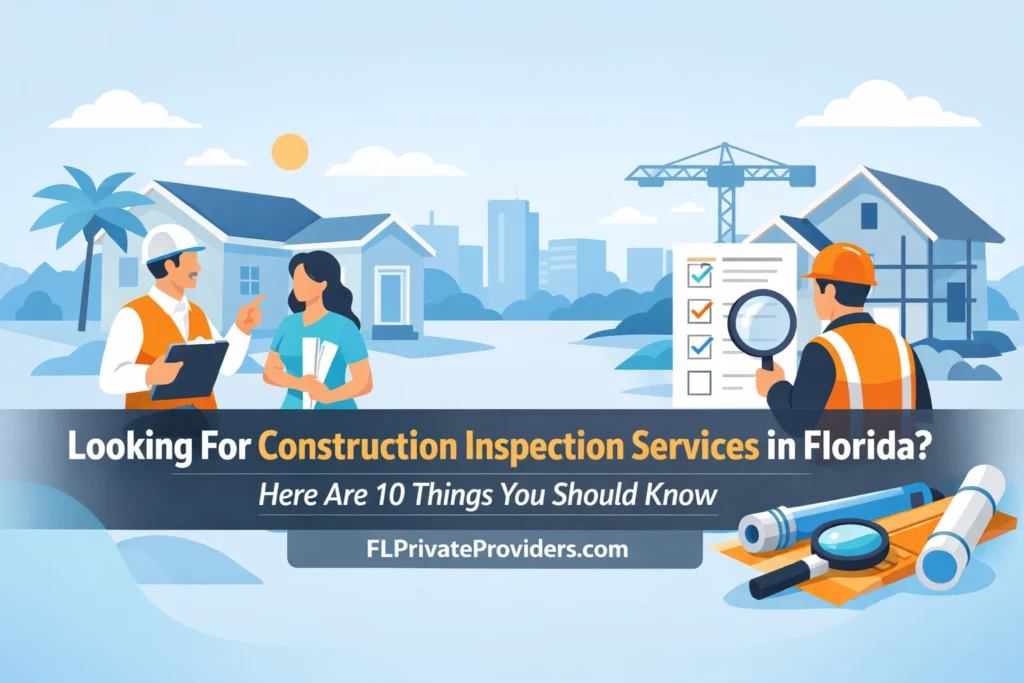
Building in the Sunshine State is a high-stakes game. Between the booming real estate market and the unique environmental challenges: hello, hurricane season: getting a project out of the ground is no small feat. But ask any developer or contractor in Miami, Orlando, or Tampa what their biggest headache is, and they won't say it’s the weather. They’ll say it’s the "red tape."
Waiting weeks for a municipal inspector to show up can kill a project’s momentum and blow a budget faster than a category five storm. That is exactly why private provider inspection florida services have become the go-to solution for savvy builders. At Florida Private Providers (FPP), we’ve seen firsthand how switching from the traditional "wait-and-see" government model to a private model can shave months off a timeline.
If you are navigating the complex world of Florida construction, you need to know how the system works. Here are 10 essential things you should know about construction inspection services florida.
1. You Have a Legal Choice (FS 553.791)
Most people assume they are stuck with the local building department’s schedule. That hasn't been the case since 2002. Florida Statute 553.791 explicitly allows property owners and contractors to hire their own private providers for both building code inspections and plan reviews.
This law was designed to create competition and efficiency. By choosing private provider inspections, you are essentially opting out of the municipal queue and into a streamlined, professional workflow. You aren't "skipping" the rules; you’re just choosing a faster way to follow them.
2. Licensing is Non-Negotiable
You can't just hire anyone with a hard hat and a clipboard. To offer private provider services, an individual must be a licensed architect or a professional engineer (P.E.) under Florida Chapters 481 or 471.
At FPP, we emphasize that quality starts with credentials. These professionals have the legal authority to certify that your work meets the Florida Building Code. When you hire a firm, ensure their team is comprised of highly qualified experts who understand the nuances of local and state regulations.

3. Professional Liability Insurance is a Safety Net
Construction is a world of risk management. Florida law requires private providers to carry significant professional liability insurance. For projects valued at $5 million or less, the provider must have at least $1 million per occurrence and $2 million in aggregate. For those massive $5M+ projects, that requirement jumps to $2 million per occurrence and $4 million in aggregate.
This isn’t just a "check the box" requirement; it’s your protection. When you work with Florida Private Providers, you’re working with a firm that is fully covered, ensuring that your project is protected from a regulatory and financial standpoint.
4. The Power of Expedited Plan Review
One of the most significant bottlenecks in the permitting process florida builders face is the initial plan review. You submit your plans to the city, and they sit on a desk for weeks.
By utilizing a private provider plan review, you can dramatically speed up this stage. Private firms focus on your project with a dedicated timeline. We provide plan review services florida professionals can rely on to catch errors early and ensure the permit is ready for approval the moment it hits the city's desk. This often leads to an expedited plan review florida experience that saves developers tens of thousands in holding costs.
5. Avoiding Conflicts of Interest
Transparency is key in this industry. A private provider cannot inspect a building they designed or constructed. If a firm is acting as your architect of record, they cannot also be your private provider for inspections. This "church and state" separation ensures that the safety and integrity of the building are never compromised by a desire to cut corners on their own design.
6. Specialized Certifications: Threshold and Beyond
Not all inspections are created equal. For "threshold buildings": typically those more than three stories or 50 feet tall, or those with high occupancy: you need a threshold inspection florida expert.
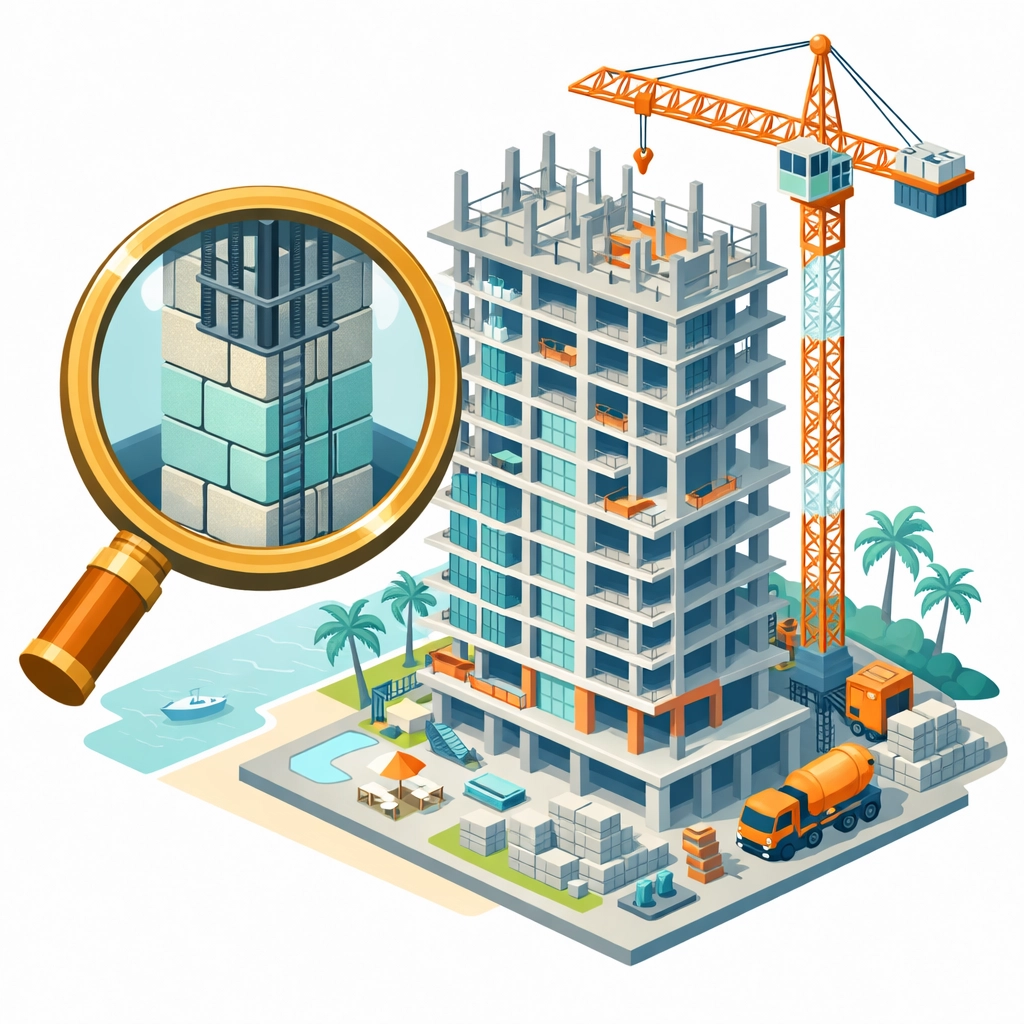
Furthermore, specific components require specific eyes. For example, masonry components often require inspectors with International Code Council (ICC) certification, while concrete inspections require American Concrete Institute (ACI) certification. When you’re looking at construction inspection services florida, ask the provider about their specialized certifications. You don't want a "generalist" looking at a complex structural masonry wall.
7. Milestone Inspections and the Post-Surfside Era
Following the tragic events at Surfside, Florida's legislature passed Senate Bill 154. This established strict "milestone inspection" requirements for residential condominiums and cooperatives three stories or higher.
Buildings must undergo these inspections within 30 years of receiving their certificate of occupancy (or 25 years in some coastal areas). These are mandatory safety checks to identify structural deterioration. If you manage an older multi-family property, understanding these private provider inspections is no longer optional: it’s a legal necessity to keep your residents safe and your building compliant.
8. The Two-Phase Inspection Approach
Structural inspections usually happen in two stages.
- Phase One: A visual assessment by a licensed pro. If everything looks solid, you're good to go.
- Phase Two: If the inspector sees signs of distress: cracks, spalling, or moisture intrusion: they move to destructive or non-destructive testing.
This phased approach prevents unnecessary costs while ensuring that hidden dangers are uncovered before they become catastrophes.
9. You Still Need to "Talk" to the Building Official
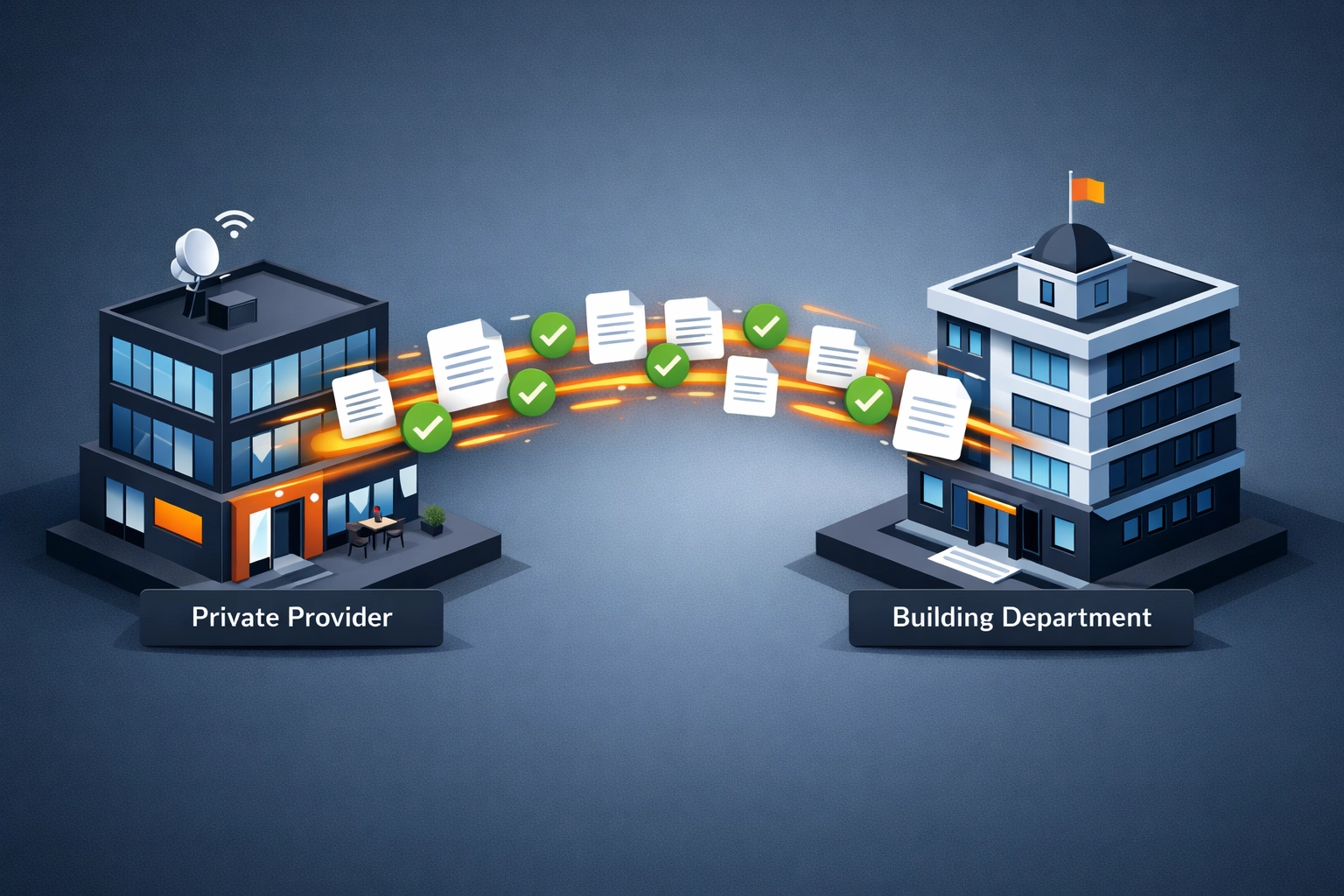
Using a private provider doesn't mean you’re going "rogue." You are still required to notify the local building official that you’ve hired a private firm. This is done through a specific form adopted by the Florida Building Commission.
We handle the coordination, but it’s important to know that the local municipality still maintains a level of oversight. The beauty of private provider services is that we handle the heavy lifting and the back-and-forth, so you can focus on the build. This is a crucial part of how we expedite permitting florida projects from start to finish.
10. Why Speed and Efficiency Matter
In the construction world, time is quite literally money. Every day you wait for an inspection is a day you’re paying for equipment rentals, labor, and interest.
The primary reason to use private provider inspection florida services is the "zero red tape" difference. While municipal inspectors might have a 48-to-72-hour window (or longer), a private provider can often be on-site exactly when you need them. This level of service keeps the permitting process florida builders deal with from grinding to a halt.
The FPP Difference: Beyond Just a Clipboard
At Florida Private Providers, we don't just see ourselves as inspectors; we see ourselves as project partners. Whether you need professional plan review or inspection management services, our goal is to eliminate the friction that usually defines Florida construction.
We know the codes inside and out. We know the local jurisdictions. Most importantly, we know that you have a deadline to meet. By integrating our private provider services into your workflow, you’re choosing a path of professional accountability and speed.
Frequently Asked Questions
Q: Can a private provider help with residential permits?
A: Absolutely. Whether it’s a custom single-family home or a massive condo high-rise, private providers can handle the inspections and plan reviews to speed up the process.
Q: How much faster is a private plan review?
A: While it varies by municipality, we often see expedited plan review florida results that cut weeks: or even months: off the standard city turnaround time.
Q: Is it more expensive to use a private provider?
A: While there is an upfront fee for the service, the ROI is usually massive. When you factor in the days saved on the construction schedule and the avoidance of costly delays, private providers almost always pay for themselves.
Conclusion
Navigating the regulatory landscape in Florida doesn't have to be a nightmare. By understanding the role of private providers and the legal frameworks like FS 553.791, you can take control of your project’s timeline.
From threshold inspection florida requirements to the intricacies of the permitting process florida, having an expert in your corner makes all the difference. Don't let red tape hold you back. Contact Florida Private Providers today and let’s get your project moving at the speed of business.
Disclaimer: This content is for educational purposes only and does not replace professional legal, engineering, or architectural advice. Always consult qualified professionals and verify current Florida Statutes and local ordinances before proceeding with construction projects.